
April
IN THIS COURSE…
In permaculture, **zones** refer to the way land and resources are organized based on how frequently they need to be accessed and managed. The system helps optimize energy use and labor by positioning elements in the landscape according to their care requirements and human interaction. There are typically **seven zones** in permaculture, each designed to suit the frequency of use and maintenance:
1. **Zone 0** – *The Home*: This is the central zone, representing the living space. It includes your house and immediate surroundings, where daily activities take place. Its design aims to make life more efficient and comfortable.
2. **Zone 1** – *The Kitchen Garden*: This zone is located closest to the home and contains areas that require frequent attention, such as vegetable gardens, herb beds, and small fruit trees. It's the high-maintenance, high-yield area, designed for easy access.
3. **Zone 2** – *The Semi-Intensive Garden*: This zone is a bit further from the home and contains crops that require less frequent attention but still need regular care. It may include larger vegetable beds, chickens, or other small animals, as well as fruiting plants.
4. **Zone 3** – *The Extensive Garden*: This zone is used for crops or animals that require less maintenance. It includes larger-scale agricultural plots, orchards, and grazing areas for animals. Tasks like irrigation and harvesting are done less frequently.
5. **Zone 4** – *The Managed Wilderness*: This zone is for wild or semi-wild areas that are managed for resources like firewood, timber, mushrooms, or forage. It's a transition zone between human habitation and the wilderness, with occasional visits for resource gathering.
6. **Zone 5** – *The Wilderness*: This is the least disturbed and most natural area, left to grow wild and evolve naturally. Zone 5 is crucial for biodiversity and ecological health, offering a place for wild plants, animals, and ecosystems to thrive without human interference.
7. **Zone 6** (optional) – *The Community/Buffer Zone*: In some systems, an additional zone may be added to account for the community level, focusing on sustainable practices that benefit the local area or create a buffer between cultivated land and the wild.
Each zone is designed to reduce energy expenditure, increase sustainability, and create harmony between the environment and human habitation. By designing with zones, permaculture systems efficiently manage resources, labor, and inputs while creating a resilient and productive landscape.
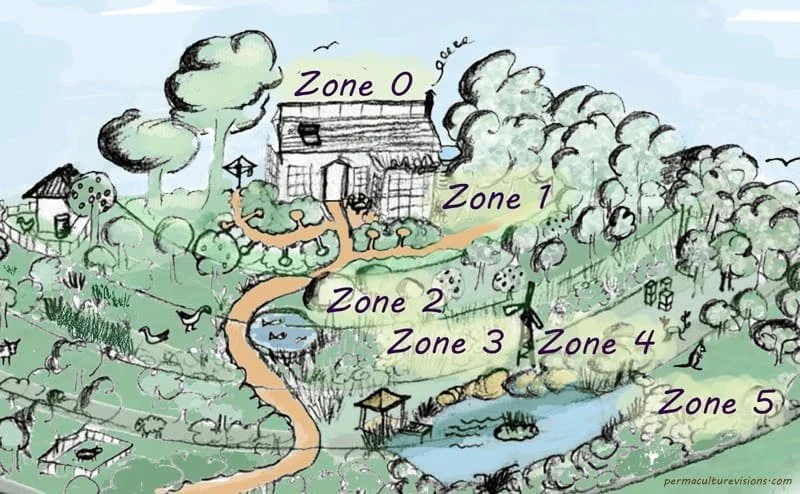
-
Oregon State - Permaculture Zones